
Now, a seamless user experience is essential; users expect more from apps and software than just functionality. If you’re building global-ready dashboards, using high-quality admin dashboard templates can simplify UI consistency across regions.
If your local services do not function accurately or your software fails to adapt to them? Then what? That’s where region-based QA and localization testing come into play.
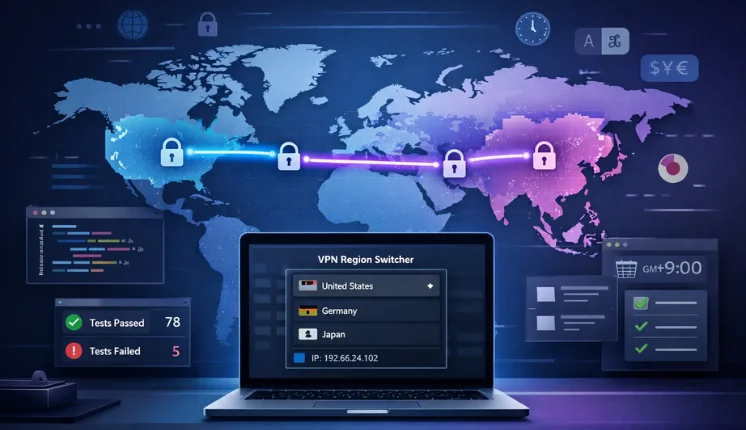
They have become essential for businesses operating around the world as they help ensure that all localization services and attributes, such as languages, payment methods, and time zones, are shown correctly. Most companies connect their software through a VPN or proxy server physically located at the target location to efficiently test localization.
In this post, we will discuss how VPNs can help with region-based QA and localization testing. Before that, let’s see in detail why you need QA and Localization testing.
Why QA and Localization Testing Matter?
When a product is developed, it goes through rigorous region-based QA and localization testing. Why? Because the developed product may fail in international markets due to various reasons. It could be bugs, cultural missteps, or legal non-compliance. Also, launching a product without proper region-based QA and localization testing can damage brand reputation and user trust.
Most companies now prefer automated localization testing over manual testing to create real-world user journeys across various countries. This helps them provide a consistent, localized experience. Using a VPN for QA and localization testing allows you to verify that your developed software performs correctly in the targeted regions. QA teams can easily recreate user experiences from different locations by routing traffic through VPN servers located in target regions. This way, they can also verify content, currency, and compliance as they appear locally.
How VPNs Enable Smooth Region-specific QA and Localization Testing
With VPNs, region-specific QA and localization testing become smooth sailing. VPN allows testing teams to change their internet traffic through servers located in target countries. This lets them simulate real user conditions and verify that software functions properly under local network conditions and delivers correct regional content while adhering to local regulations. Aside from this, there are many other areas in QA and localization testing where VPN is essential.
Network Simulation
There are scenarios where users can not access 4G networks in some areas, even if they are available. In these cases, VPN is very helpful; it helps recreate slow 3G or unstable Wi-Fi conditions using network throttling tools. Developers and testing teams can use this replicated environment to make necessary changes and improve network performance. This way, they can ensure performance optimization across diverse infrastructures.
Localization Testing
Many apps and software include features such as currency display, language support, and cultural references. A VPN from a target country helps testing teams to ensure that these features are correctly rendered. It also helps verify that the interface displays correct date formats and time zones based on the user’s location. For example, if you are targeting France region, you can use a VPN with a French server to find out if the app or software shows Euros and DDMMYYYY date formats.
Geo-Blocking & Compliance Testing
With VPNs, QA teams can easily test geo-blocking rules and region-specific privacy policies. As you may have seen, sometimes you cannot access certain content. This is due to geo-blocking rules and region-specific privacy policies. VPN helps confirm that the software complies with local laws and properly restricts access to banned services only in that region.
How VPN Preserve Privacy and Compliance While Testing
Most of us use a VPN to access geo-restricted content and surf the internet without worrying about being monitored. Right? As for QA and testing teams, VPN can enhance privacy and compliance during testing. It can encrypt data, hide IP addresses, and enable secure access to region-specific content. This ensures that sensitive test data remains confidential and that their testing activities follow international regulations.
Also, using a VPN hides their real IP address and ensures their location remains unknown during tests, which is crucial for ethical hacking and penetration testing. Thus, now using a VPN is common practice among testers to keep all transmitted data encrypted during testing and prevent unwanted access from ISPs and hackers.
Besides this, testers can create user interactions from various countries by connecting to servers in different regions. This helps them identify whether the software complies with local laws or not. Popular VPNs such as Proton VPN and ExpressVPN offer reliable global server coverage. If you are looking for a VPN server vise, then Proton VPN is for you. It offers over 18k servers worldwide. If you want to know more about these two VPNs, then check out the Proton VPN vs ExpressVPN comparison.
As for privacy concerns regarding the use of VPN, most VPNs have no-logs policies that prevent them from storing user activity and support compliance with data protection standards. Both no-logs policies and end-to-end encryption prevent data leakage. Aside from them, some VPN also include built-in protections against DNS leaks and IPv6 leaks and provide Kill Switch functionality that automatically disconnects internet access if the VPN shuts down. This way, you can save yourself from accidental exposure of real IP addresses.
Limitations:
VPNs are effective for manual and exploratory testing, as they offer global coverage and local IPs to avoid detection. However, sometimes using VPNs to simulate user locations often fails due to various reasons such as caching, IP misidentification, or incompatibility of devices. This makes it hard for QA and localization testing teams to replicate real user experiences by region.
Besides this, there are cases when connecting to a different server using VPN can take several seconds to several minutes to establish a secure tunnel. This can slow down testing, especially when testing multiple regions. Also, VPNs cover the entire device; you cannot do parallel testing across different apps or locations.
VPNs are good for quick manual testing, but when it comes to automated testing, they become impractical, especially when you require parallel execution and zero startup time. In these cases, proxy servers are better suited.
To ensure your application delivers a seamless experience globally, start with scalable UI solutions like modern admin templates.
Conclusion:
QA and localization testing help you ensure your software and site work the way you want in a particular region. Surely, VPN plays its part in helping test the layout, language, functionality, and cultural details for the targeted region and improve user experience. They are good QA teams that want quick checks without complex setup to verify localization features.